
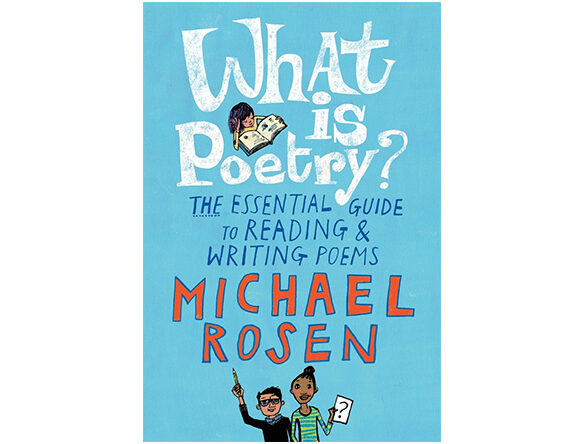
I picked up this book at the library during the summer of 2025 because it looked like a good book for explaining poetry to children.
After starting to write this post, I realized thast the author of this book (What Is Poetry? — Essential Guide to Reading & Writing Poems) was also the author of one of my son’s favorite board books when he was young: We’re Going on a Bear Hunt.
(In the 30+ years since it was published, Bear Hunt has become a classic in children’s literature.)
Just as Michael Rosen did an excellent job with that classic book, he also did an excellent job of explaining what poetry is … or actually, what poetry DOES … in this book. (Jill Calder was the illustrator.)
Poetry does many things. According to Rosen, it can suggest things — feelings, thoughts, problems, ideas. The poems don’t try to give answers, but instead, “leave us to do a lot of figuring out.” The example Rosen used to illustrate this was a poem by Emily Dickinson:
A Word Is Dead
A word is dead
When it is said,
Some say.
I say it just
begins to live
That day.
Poetry can also play with words, capture a moment, and borrow voices.
The differences between each of these are explained in detail in the first chapter.
In Chapter 2, Rosen talked about different things you can DO with a poem. You can read it, memorize it (learn it by heart), and combine it with other types of art (such as music, painting, and video).
With each chapter, it became more and more obvious to me that Michael Rosen REALLY wanted to encourage young people to experiment with writing poetry. Especially when I saw the helpful information he shared in Chapters 4 and 5 (“Ways to Start a Poem” and “Writing Poems”).
Daydreaming, making lists, keeping a notebook (journal), and starting with a picture are just a few of the many suggestions included in Chapter 4.
Chapter 5 starts like this: “Once you have an idea for a poem — a daydream, a moment, an object you like, an event or a happening — you might want to try out different ways of writing it down.”
One method Rosen suggested was: talking with your pen … letting your writing “flow” onto the page. Another is impression writing — using non-sentences or phrases that describe something. Here’s an example, with a cat as the subject:
Scratch on the door
Whiskers twitching
Tail flicks
Up in the sky, a bird
Another method is symbolism — allowing an animal, object, or activity to represent something else. (Rosen explains how he used this technique in one of his first poems … written when he was 16.
In Chapter 6 (“Some Technical Points about Poems”), Rosen fills nearly 20 pages with helpful info on this unique form of writing. Rhythm and rhyme, sound techniques, metaphors and similes (two of my favorite parts of speech!), and personification.
In the Appendix, Rosen encouraged young readers to try and watch poets perform their work as often as possible, suggesting arts centers and libraries as possible places to do this. He also included a long list of links to poetry-related websites and videos that show poets performing their poems “live.”